Moose Hunting Wildlife Art Tumbler: A Designer's Field Test
When I first opened the Moose Hunting Wildlife Art Tumbler design file, I was curious how a piece originally built for laser engraving would translate into the world of machine embroidery. As someone who has tested hundreds of embroidery files for everything from custom apparel to handmade gifts, I have learned that a strong design is not just about the artwork itself—it is about how that artwork behaves under the needle. This moose hunting theme carries a rugged, outdoorsy personality that immediately felt like a natural fit for Embroidery projects aimed at hunters, nature lovers, and anyone who appreciates wildlife art. The question I needed to answer was whether this Graphics file could hold its own when stitched out on fabric, and whether it would deliver the kind of finished product that small shop owners and Etsy sellers can stand behind.
First Impressions: Mood, Theme, and Visual Personality
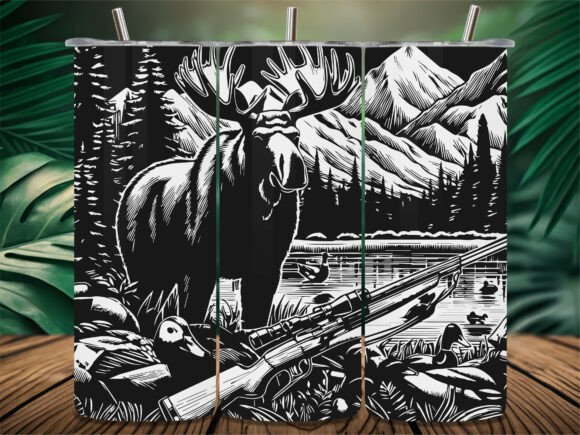
The Moose Hunting Wildlife Art Tumbler design presents a bold, masculine silhouette with clean lines and a strong central focal point. The moose is depicted in a natural, alert stance, surrounded by subtle woodland details that suggest movement and depth. The composition feels balanced without being crowded, which is a critical quality for any embroidery file that needs to scale across different product sizes. The mood is rugged, serene, and slightly adventurous—the kind of design that works well on a sweatshirt for a weekend hunting trip or on a personalized tote bag for a nature-themed craft fair. The visual personality is honest and grounded, which makes it easy to imagine this design appealing to a specific customer base rather than trying to be everything to everyone. For a small business owner, that clarity is a valuable asset.
Real-Life Scenario: Stitching the Moose onto a Custom Tote Bag
I decided to test the Moose Hunting Wildlife Art Tumbler on a heavy-duty canvas tote bag, the kind that crafters often sell at markets or list on Etsy as personalized gifts. Canvas is a forgiving fabric for testing new designs because it holds stabilizer well and does not shift excessively under the needle. I used a medium-weight cutaway stabilizer and a standard hoop size that comfortably fit the full design. The satin stitch outlines came through cleanly, with no noticeable gaps or uneven tension. The fill stitch areas, which cover the moose body and some of the background elements, sewed out smoothly without any puckering. The design did not require excessive thread color changes—just four or five well-chosen shades that gave the moose a natural, dimensional look. The finished tote bag had a professional, ready-to-sell appearance that would easily command a premium price at a boutique or craft show. I could already picture a customer ordering it as a Father's Day gift or a birthday present for an avid hunter.
Performance Across Different Product Types
After the tote bag test, I wanted to see how the Moose Hunting Wildlife Art Tumbler would behave on other surfaces. I ran samples on a cotton sweatshirt, a denim apron, and a polyester blend cap. On the sweatshirt, the design maintained its clarity even with the fabric's slight stretch, thanks to the moderate stitch density that did not pull the material out of shape. The denim apron handled the design well, though I recommend a heavier stabilizer for denim to prevent the stitches from sinking into the weave. The cap was the trickiest test because curved surfaces can distort even well-designed embroidery files. The moose shape held up reasonably well, but I did notice that some of the finer details—particularly the antler tips—required careful hooping and a firm stabilizer to avoid misalignment. For caps, I would suggest reducing the overall size slightly or simplifying the most delicate elements to ensure a clean result. Overall, the design performed best on stable, medium-weight fabrics and showed real versatility across a range of handmade products.
Where This Design Should Be Used Carefully
No design is perfect for every situation, and the Moose Hunting Wildlife Art Tumbler has a few limitations worth noting. The small details in the antlers and the background foliage can become problematic in very small hoop sizes, such as those used for baby embroidery or tiny patches. If you plan to use this design on a baby onesie or a small cap, I recommend testing it at a reduced scale first to see if the details remain readable. The design also requires careful attention on stretchy fabrics like jersey knit or lightweight t-shirts, where the fill stitch areas may cause the fabric to ripple. Using a stabilizer with good recovery properties and a lightweight topping can help mitigate this issue. Dark fabrics are another consideration: the moose image relies on a mix of mid-tone and dark thread colors, so you may need to adjust the color palette or add a light underlay if you are stitching on black or navy material. Finally, because this is a design that customers may want on items that see frequent washing—like kitchen towels or outdoor gear—I recommend using high-quality thread and a tear-away or cutaway stabilizer that will hold up over time.
Visual Appeal, Stitching Clarity, and Product Value
One of the strongest selling points of the Moose Hunting Wildlife Art Tumbler is its visual appeal when stitched out. The moose shape is immediately recognizable, and the balance of satin stitch and fill stitch gives the design a textured, handcrafted look that customers associate with quality. The stitching clarity is excellent in the larger areas, though the fine antler lines do require a well-maintained machine and a sharp needle. From a product value standpoint, this design elevates any item it is applied to. A plain canvas tote bag becomes a personalized gift. A basic sweatshirt becomes a statement piece for a hunting enthusiast. An embroidered patch becomes a collectible item that someone might sew onto a jacket or backpack. For Etsy sellers and small shop owners, that kind of transformation is exactly what drives customer engagement and repeat business. The design also photographs well for listing photos and printable mockups, which is a practical advantage for anyone selling digital embroidery files or finished products online.
Practical Embroidery Designer Notes
Before you commit to stitching the Moose Hunting Wildlife Art Tumbler for a client or a product line, there are a few steps I always recommend taking. First, test the design on scrap fabric that matches the final product material. This will reveal any issues with stitch density, thread tension, or fabric compatibility before you invest time in a full production run. Second, check your thread color contrast against the fabric color. A design that pops on a light background may disappear on a dark one, so consider running a black and white mockup to evaluate the overall contrast. Third, confirm your hoop size is large enough to accommodate the full design without distortion. If the design is too large for your hoop, you may need to resize it or split it into multiple hoppings. Fourth, inspect the small details—especially the antler tips and the background elements—to ensure they will stitch out cleanly at your intended size. Fifth, use an appropriate stabilizer based on the fabric type: cutaway for knits and stretchy fabrics, tear-away for wovens and stable materials. Finally, check the licensing terms before selling any finished items or digital products. While the design is available for personal and commercial use in many cases, it is always wise to confirm that you have the right to sell the stitched products or the digital embroidery file itself. If any specifications like stitch count or file format are not provided, contact the seller or test the file in your embroidery software to verify compatibility with your machine.
Final Thoughts for Small Shop Owners and Crafters
The Moose Hunting Wildlife Art Tumbler is a solid choice for anyone in the Crafts space who wants to offer wildlife-themed products with a rugged, professional finish. It performs well on a variety of fabrics, translates effectively across different product types, and delivers the kind of visual impact that customers notice. Whether you are stitching it onto a custom tote bag, a sweatshirt, an apron, a cap, or a pillow cover, this design holds its own as a reliable embroidery file. It is not a design that tries to do too much—it knows its audience and delivers exactly what they are looking for. For Etsy sellers, handmade shop owners, and creative entrepreneurs, that focus is a practical advantage. Add this design to your digital collection, test it on your preferred fabrics, and you will likely find it earns a regular spot in your product lineup. The moose hunting theme is timeless, and a well-stitched finished product built from this design will serve your customers for years to come.