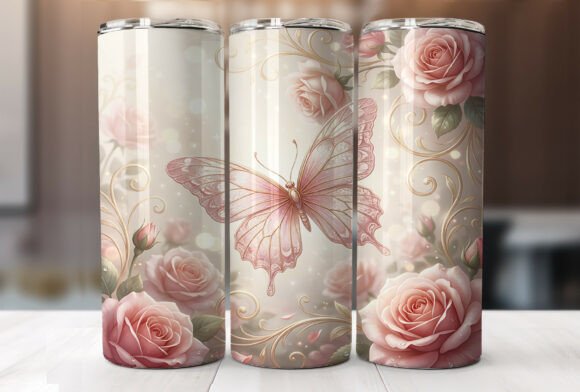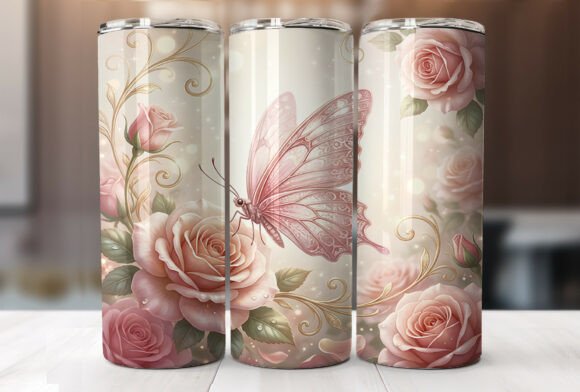
Blush Rose Gold Butterfly Tumbler Wraps & Graphics
When you are building a digital product shop, every new graphic design asset you bring into your workflow needs to earn its place. I have been selling printable designs and commercial design files for long enough to know that not every pretty graphic translates into a profitable product. So when I sat down to review the Blush Rose Gold Butterfly 20oz Tumbler design, I approached it the same way I approach any new asset: I opened it, tested it across a few product concepts, and asked myself whether it would actually help me move inventory or just sit in a folder. Here is what I found.
A Design with Clear Visual Personality
The first thing that struck me about this design is its mood. The blush tones combined with rose gold accents and a butterfly motif create a look that sits somewhere between elegant and playful. It is feminine without being saccharine, and the rose gold element gives it a modern, slightly premium feel that could appeal to buyers looking for something decorative but not overly rustic or vintage. In my experience, this kind of visual personality tends to perform well with audiences who enjoy handmade business aesthetics, small business branding, and personalized merchandise. It does not try to be everything to everyone, which is actually a strength when you are targeting a specific buyer on Etsy or Creative Fabrica.
The butterfly motif is versatile enough to feel seasonal—spring, summer, even a soft Valentine’s or Mother’s Day collection—but it is not so tied to a holiday that it becomes unusable after a few weeks. That is a practical consideration I always weigh when I look at a new graphic design asset. If I can only sell it for two weeks out of the year, I need to price it differently. With this design, I see potential for year-round use in the right niche.
What You Actually Get with the File
Before I talk about applications, let me clarify what is included. The product is a digital file, not a physical item. You receive a PNG file with two layout options: one straight and one tapered. The dimensions are 9.3 by 8.2 inches at 2790 by 2460 pixels, with a 300 DPI resolution, formatted for a 20 oz tumbler. This is a printable design meant for sublimation or transfer onto a tumbler surface. The file is ready to use for anyone who works with sublimation printers, heat presses, or compatible transfer methods. The 300 DPI resolution is a solid baseline for print quality, and the pixel dimensions give you enough detail to work with larger previews and mockups without losing sharpness.
Where This Design Fits in a Real Shop Workflow
I tested this design across several product categories that I regularly sell or create for clients. Here is where it showed the most promise.
Tumbler Wraps and Sublimation Projects
Naturally, the primary use case is tumbler wraps. The straight and tapered options give you flexibility depending on the tumbler shape you are using. I tested it on a standard 20 oz straight tumbler and a tapered version, and the design scaled well without distortion. The blush and rose gold palette prints cleanly on white or light-colored tumblers, and the butterfly motif remains crisp at full size. If you sell on print-on-demand platforms or through your own Etsy product listings, this file is ready to go with minimal adjustment. I would still recommend running a test print on your specific substrate before publishing a listing, because blush tones can shift slightly depending on the printer and coating. But the file itself is well-constructed.
PNG Designs and Clipart for Digital Bundles
Beyond tumblers, the butterfly element can be extracted or used as a standalone graphic for clipart bundles, sticker design, and printable wall art. Because the file is a PNG with a transparent background—assuming the seller provides that—you can layer it into Canva templates, social media graphics, or even packaging design for small business branding. I created a quick mockup of a sticker sheet and a simple greeting card, and the design held up well at smaller scales. The rose gold accents lose some impact if you shrink the butterfly too much, so I would keep the final printed size above one inch for stickers or detail work.
Canva Templates and Social Media Graphics
I also imported the design into Canva to test it as a background element for a promotional graphic. The blush tone works well as a soft backdrop for text overlays, especially if you pair it with a handwritten font or a clean sans serif. The butterfly adds a decorative touch without overwhelming the text. This makes it useful for social media templates, blog graphics, and even invitation templates. If you sell digital downloads like planner stickers or printable party kits, this design could fit into a coordinated collection.
Product Presentation and Listing Appeal
One of the biggest challenges in selling digital products is making your listing stand out in a crowded marketplace. The Blush Rose Gold Butterfly 20oz Tumbler design has good thumbnail appeal because of the soft, warm color palette. When I placed it on a product mockup with a white background, the blush and rose gold popped without feeling harsh. On a dark background, the contrast is still there, but the rose gold can blend in if the mockup is too dim. I would recommend testing your mockup previews on both light and dark backgrounds to see which version drives more clicks. In my experience, a white or light gray mockup background gives this design the best chance of catching a buyer’s eye while scrolling.
If you are creating a themed bundle, this design could anchor a collection of blush and rose gold items. Consistency across your product images builds trust and perceived value. I have seen sellers increase their average order value by bundling a tumbler wrap with matching clipart, a sticker sheet, and a social media template. This design supports that kind of visual storytelling without requiring you to edit the file heavily.
Where to Be Careful with This Design
No design is perfect for every application, and I want to be honest about the limitations I noticed. The rose gold accents are delicate, and if you print this design at a very small size—say, for a tiny sticker or a detail on a planner layout—the metallic effect can become muddy or lose definition. I would avoid using this design for products where the print area is smaller than two inches in any dimension unless you test it first. Similarly, if you are cutting the design with a Cricut or Silhouette for a vinyl project, the butterfly wings have fine lines that may not cut cleanly on a single layer. You might need to simplify the cut path or use a print-and-cut approach instead of a pure cut design.
Another consideration is contrast. On very dark backgrounds, the blush tone can fade into the substrate, and the rose gold may not show up as a distinct accent. If you are selling sublimation designs for dark tumblers, you will want to test a print on a white or light-colored base layer first. For printable designs intended for paper or cardstock, the contrast is fine as long as the paper is not too dark.
Practical Seller Notes before You Publish
If you decide to add this design to your product lineup, here are a few steps I recommend taking before you hit publish on your listing. First, test the file on a real mockup. Do not just use the preview image from the download. Create a mockup that shows the design on a tumbler, a sticker sheet, or a wall art frame, and look at it at thumbnail size. If the design does not read clearly at a small scale, your click-through rate will suffer. Second, verify the PNG transparency. Open the file in your editing software and confirm that the background is actually transparent and that there are no stray pixels or artifacts around the butterfly edges. Third, check the file resolution against your platform’s requirements. At 300 DPI and 2790 by 2460 pixels, this file is suitable for most print products, but if you are selling through a marketplace that demands higher resolution for large-format prints, you may need to upscale carefully.
Organize your files clearly for customers. If you are selling a bundle, include both the straight and tapered versions in a folder with a descriptive file name. I also like to include a short usage guide or a link to the commercial license terms so buyers know exactly what they can create with the design. Speaking of licensing, confirm the commercial license for this file before you sell finished products. Most graphic design assets in this category allow you to use the design on physical products for sale, but the terms vary. Do not assume you have permission to resell the digital file itself or include it in a clipart bundle without checking the license.
Font Pairing and Visual Hierarchy
When I use a design like this in a product mockup or a template, I pay attention to font pairing. The blush rose gold aesthetic pairs well with a handwritten font or a light serif for a romantic, elegant feel. A sans serif font keeps it modern and clean, which works for social media graphics or packaging design. I avoid heavy display fonts with this design because they can compete with the delicate butterfly motif. If you are creating a Canva template or a printable invitation, keep the visual hierarchy simple: let the design be the hero, and use text as a supporting element. That approach tends to resonate with buyers who are looking for a complete, ready-to-use product rather than a blank canvas.
Final Thoughts on Commercial Viability
After testing the Blush Rose Gold Butterfly 20oz Tumbler across several product categories, I can say that it is a useful add to a digital product shop, especially if you already sell sublimation designs, tumbler wraps, or decorative printables. It is not a one-size-fits-all asset, but it does not need to be. The blush and rose gold palette has a clear audience, and the butterfly motif gives it enough versatility to appear in multiple collections without feeling repetitive. If you are a print-on-demand seller, a Cricut creator, or a small business owner building a brand identity around soft, feminine aesthetics, this design is worth testing. Just be realistic about where it shines and where it struggles, and always test your prints before you list them. That is the difference between a product that sells and a product that sits.